


 Italy Shopping Festival
Italy dominates luxury production, generating over forty percent of global high-end fashion goods. Travelers flock to the peninsula for ancient history and the chance to acquire heirloom-quality goods. This manual serves as The Ultimate Shopping Guide to Italy for travelers seeking genuine local masterworks.
Navigating regional markets requires local insight. Wise preparation saves thousands of euros. Utilizing The Ultimate Shopping Guide to Italy also keeps tourists from falling for cheap, mass-produced imitations.
Milan’s Golden Quadrilateral and Luxury Fashion Hubs
Milan dictates global style trends. The Quadrilatero della Moda concentrates flagship spaces for labels like Prada, Armani, and Versace into a few walkable blocks. Via Monte Napoleone anchors this district, holding the title of the world’s costliest retail street with rents topping twenty thousand euros per square meter.
Entering these designer havens requires a smart plan. Serious fashion collectors should head straight to the historic storefronts inside Galleria Vittorio Emanuele II. This majestic nineteenth-century arcade merges soaring glass domes with high-end shopping.
To get the most out of a Milanese excursion, direct your attention to these retail hubs.
- Via della Spiga offers a quiet, car-free lane dedicated to legendary fashion houses.
- Corso Buenos Aires hosts over three hundred accessible European brands for budget-minded visitors.
- 10 Corso Como blends an avant-garde boutique with an art gallery, bookstore, and leafy cafe.
Florence and the Legacy of Tuscan Leather
Florence shifts the focus entirely toward historic workshops and ancient tanning methods. Artisans along the Arno River have treated premium hides since the Middle Ages using natural vegetable-based formulas. The rich scent of genuine leather fills the narrow stone streets long before you step inside the shops.
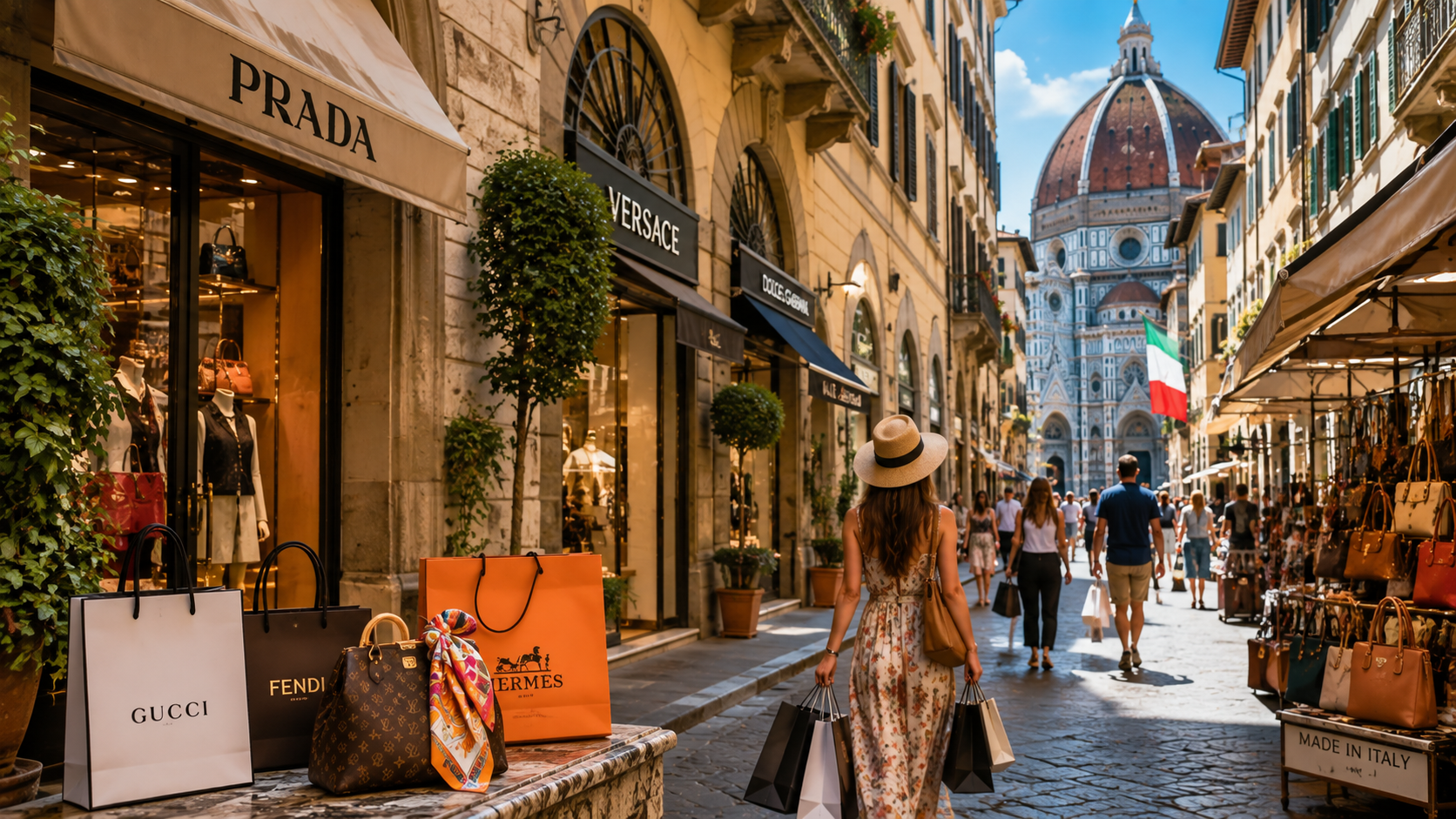
Finding authentic Tuscan goods requires a sharp eye to avoid cheap tourist knockoffs. The celebrated Scuola del Cuoio, tucked behind the Basilica of Santa Croce, provides a reliable starting point. Established after the second world war to teach orphans a viable trade, it still produces exquisite handmade bags.
Inspect the stitching, raw edges, and natural grain before buying. Real Florentine leather reveals tiny, unique imperfections. These variations prove the item was crafted by hand rather than stamped out by a machine.
Rome: Antique Treasures and Roman Tailoring
Roman shopping spans millennia, jumping from ancient relics to current runway looks. The streets fanning out from the Spanish Steps, especially Via dei Condotti, serve as the core of local luxury. Here, storied jewelry houses like Bulgari display historic designs right next to modern seasonal collections.
Finding old treasures and modern fashion in the Eternal City is easy with help from The Ultimate Shopping Guide to Italy. For a completely different vibe, wander through the historic Trastevere district to discover independent designers. These quiet alleys host tiny shops selling limited-run garments and one-of-a-kind accessories.
Antique hunters should coordinate their schedules around the city’s weekly open-air markets. The Sunday market at Porta Portese features over one thousand stalls packed with vintage clothing, oil paintings, and rustic furniture. Arriving at dawn secures the finest finds before the crowds take over.
Reclaiming Taxes: The VAT Refund Process
Buying goods in Europe comes with a major tax advantage for international travelers. Italy levies a twenty-two percent tax on consumer goods, factored directly into the retail price. Visitors living outside the European Union can recover a large chunk of this tax before flying home.
Saving money through this process is a key focus of The Ultimate Shopping Guide to Italy. To qualify, you must spend at least seventy euros in a single participating shop. Look for a tax-free emblem displayed in the shop window to confirm participation.
Follow these simple steps at the airport to secure your refund.
- Ask the shop assistant for a tax-free invoice and the official declaration form at the cash register.
- Present your unused items, passport, and receipts to the customs desk before checking your bags at the airport.
- Take the stamped documents to the airport refund counter to collect your cash or receive a card credit.
Artisan Magic in Venice and Southern Italy
Venice and the southern provinces preserve trade secrets passed down through generations. The island of Murano has served as the capital of elite glassblowing since twelve ninety-one. Back then, city rulers moved the smoky furnaces to the lagoon to protect Venice’s wooden buildings from fires.
Tracking down these regional treasures makes The Ultimate Shopping Guide to Italy a valuable asset for collectors. Further down the coast, Campania shines with its hand-painted pottery. Towns like Vietri sul Mare produce beautiful plates, tiles, and pitchers painted with bold lemon patterns.
Ask about direct shipping when buying fragile glass or heavy pottery. Most respected workshops maintain contracts with global couriers to send purchases safely to your home door. This avoids the stress of carrying delicate pieces in your luggage.
To help map out your trip, The Ultimate Shopping Guide to Italy outlines the signature products of each retail hub.
| City | Signature Specialty | Famous Shopping District |
|---|---|---|
| Milan | High Fashion & Designer Apparel | Quadrilatero della Moda |
| Florence | Handcrafted Leather Goods | Scuola del Cuoio & Arno Workshops |
| Rome | Antiques & Historic Design Houses | Via dei Condotti & Trastevere |
| Venice | Blownglass & Lagoon Crafts | Murano Island |
Seasonal Sales and Smart Buying Tactics
Booking your trip during certain months can slash your spending. Italy coordinates two massive nationwide sales events called Saldi each year. The winter discounts start in early January, while the summer clearance begins in early July.
Scheduling your vacation around these markdowns is a smart tip highlighted in The Ultimate Shopping Guide to Italy. Discounts begin at thirty percent and slide down to seventy percent as shops clear out inventory. National laws regulate these events, forcing shop owners to show both the original price tag and the markdown.
Observe traditional boutique manners to ensure a pleasant interaction.
- Offer a friendly greeting to the shopkeeper upon entering a small boutique.
- Ask for help before touching delicate silk garments, fine jewelry, or expensive leather.
- Keep your paper receipts close by, as you will need them to verify your purchases at customs and process tax refunds.
Navigating the Retail Landscape Like a Local
Shopping successfully in Italy takes local awareness, good timing, and basic planning. By focusing on regional strengths like Milanese tailoring, Florentine leather, and Roman antiques, you will walk away with lasting treasures. Knowing how to claim tax back and when the clearance events happen stretches your vacation budget.
With these insights, you can transform your trip by following the steps in The Ultimate Shopping Guide to Italy. Focus on slow fashion, appreciate local craft, and bring home a piece of Italian history.


Comments are closed